
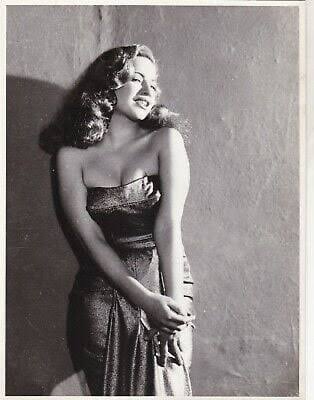
Fig. 1. A story in five reels. Everything in it is true, except for the parts that are better that way.
Above: Hind Rostom, late 1950s. Photographer not credited. Wikimedia Commons, public domain.
Reel one: the name that was almost given
INT. A FAMILY KITCHEN. DAY.
Two parents of Egyptian origin are choosing a name for a baby. There is a shortlist. On it, in the good handwriting, is the name Hind.
They mean Hind Rostom. Born in Alexandria in 1929. More than eighty films. Called the Marilyn Monroe of the East, a title she wore the way one wears somebody else's coat: elegantly, and with the clear intention of keeping her own shape underneath it.

She was Hannuma, the drinks seller of Youssef Chahine's Cairo Station, in 1958, and nobody in that railway station could look anywhere else. She played women who talked back. On one set, according to Khamsa, she noticed that the Egyptian extras were paid less than the European ones, and pushed for them to be paid the same.
In 1979 she stopped, with no regrets. Years later she was offered more than a million Egyptian pounds to turn her life into a television series. She declined, on the grounds that it was not for sale. Then she was offered a state honour. She declined that too, on the grounds that it was late.
"She might have been an accidental feminist," the critic Joseph Fahim told The National.

The baby, in the end, is given another name. But a name that has been almost given does not simply leave. It waits in the hallway with its coat on. It waited for a long time.
Reel two: the tube top
EXT. SUMMER. SOME YEARS AGO.
A five-year-old walks into frame, dead centre, with total authority.
Costume, from top to bottom: one turquoise tube top with an asymmetric strap and Pocahontas on the front. One pair of white capris. One pair of small flip-flops. The child is, there is no gentler word for it, addicted.
CUT TO: the same outfit, decades later, on everybody, all summer.
Our future founder stands very still and watches it go by, and feels something that turns out to be relief. Nothing is ever really over. Fashion goes round, and it comes back for you. To take part in that, to keep the wheel turning, is the whole principle of vintage. It may also be the only kind of immortality on offer.
Reel three: the woman in Saint-Germain
INT. A VINTAGE SHOP. SAINT-GERMAIN-DES-PRÉS. TEN YEARS AGO.
A rail. A Moschino Couture skirt. Behind the skirt, an elderly woman who has been waiting a very long time for someone to ask.
Someone asks.
What follows is not a sale. It is a lecture, a love letter and a small act of resistance. She knows the collection. She knows where it got its ideas. She tells all of it, with her hands.
The skirt was bought. That was almost beside the point. What left the shop that day was a conclusion: passionate people are fascinating, and so are the things they refuse to forget.
Nearly ten years of styling and designing followed, and vintage was there the whole way, in the dressing room and on the drawing board. Then, one day, the name in the hallway stood up. It took a new spelling, and a job.
Reel four: the duck
CLOSE ON: a wax seal. On it, a duck, armed, taking aim at a plate.

Humans shoot at ducks. Humans shoot at plates. Here, for once, the duck takes its turn.
This is not a joke, or it is not only a joke. It is how we think about getting dressed: you take the codes, you take what came before you, you turn the whole thing upside down, and you see who laughs first.
Which brings us to the sentence underneath it all. Some tales are better left untrue. Not every story a piece of clothing tells you is accurate. A dress can lie beautifully. It can make you a widow, a countess or a getaway driver between the front door and the taxi. Those stories still deserve to be told.
The facts are another matter. There, we are strict. We find out what we can about each piece, and when we don't know something, we say so. Fiction is for the person wearing the dress. The description has to be honest.
Reel five: the archive
INT. PARIS. NOW.
So we go looking, through every era, for pieces that should have disappeared and did not. The rare, the overlooked, the gloriously too much. We look at the cut, the material and the thought behind them, and at the sexiness, which never left and was only ever waiting for a good reason.
Then we send them back out. A dress on a rail is only waiting, and we have some experience of things that wait.
Bold, honest, maximalist. That is the whole brief. If a piece from this archive leaves you with pure excitement and a little more imagination than you came in with, the film has done its job.
FADE OUT.
Fashionably, Ruhstom Archives.
Sources on Hind Rostom. The National, Arab News, Khamsa, Wikipedia. Sources differ on her year of birth; 1929 is the most often cited. Seal: Ruhstom.